
Configure Your Form (Create a Form Myself, Salesforce)

Configures a Salesforce as the data source for the app, and creates the form based on a Salesforce entity.

Background and Setup

Good to Know

  • After you create a form-based app, you cannot change the app to use a different data source. For example, you can not change a form-based app to use a different entity or SharePoint list than the one specified when the app was created. This limitation also applies to cloned apps. That is, you cannot clone a form-based app, and then change the data source in the cloned app.
  • Once configured, the primary data source in a data source bound app cannot be deleted. Deleting the primary data source can lead to unexpected behavior or errors in your app because it is the main source of data for the app.
  • When you create a form-based app, these forms are created:
    • New form
    • Update form
    • 3 types of View form:
      • All Records - Shows all the records created for the form-based app.
      • Recently Created Records - Shows the records created for the form-based app in the last 7 days.
      • Recently Modified Records - Shows the records changed for the form-based app in the last 7 days.

      A lookup is created for each view form.

How to Start

  1. Create an app.

    For more information, refer to Create an app.

  2. On the Do you want AI to create your form? screen, click Create Form Myself.
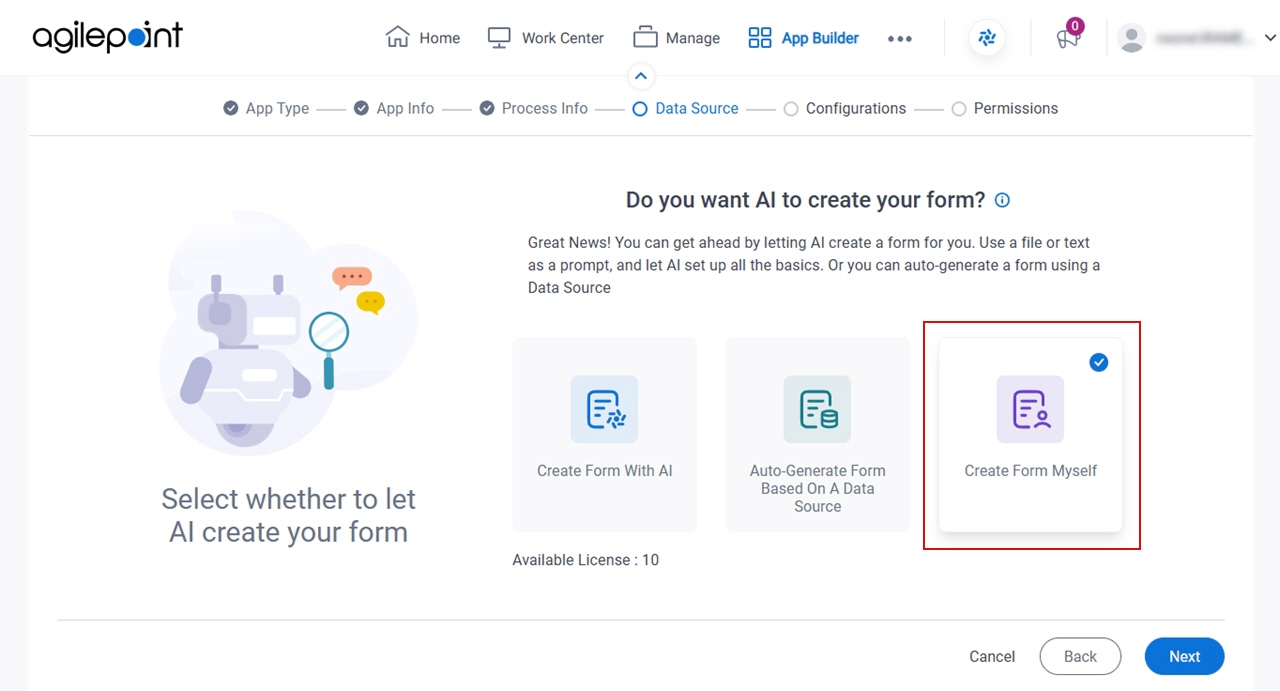
    Click Create Form Myself
  3. Click Next.
  4. On the Where do you want to store the data for your app? screen, click Salesforce.
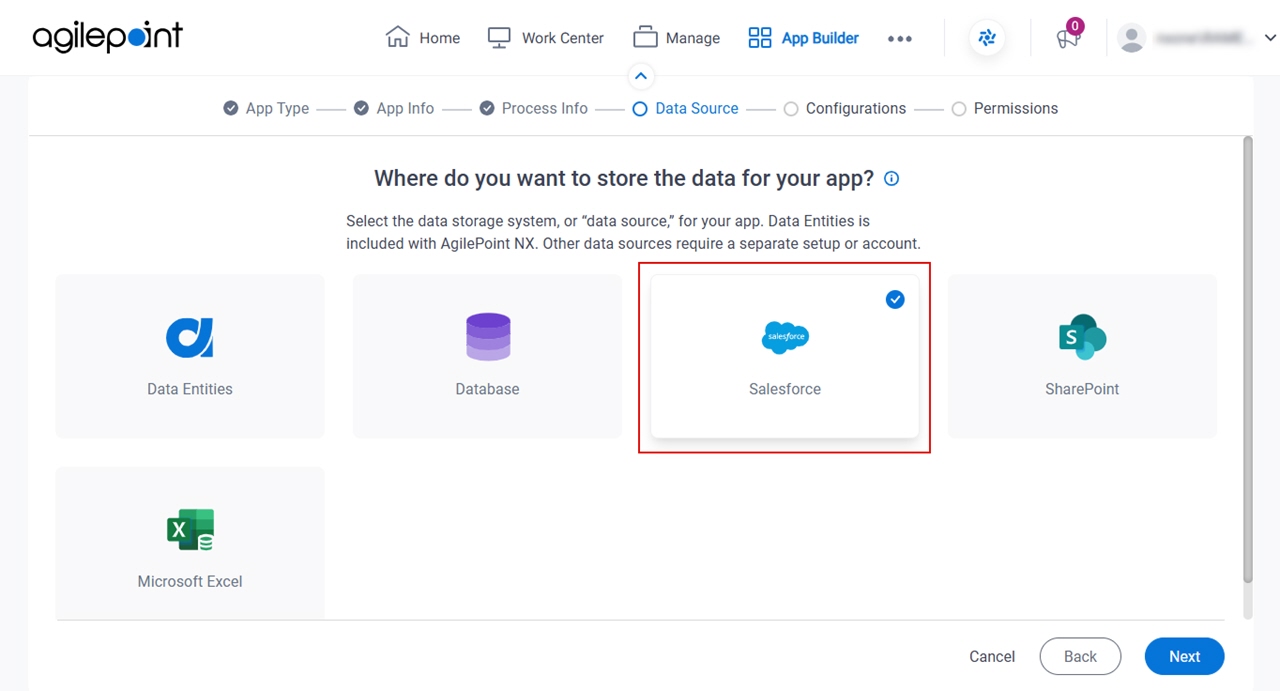
    Click Salesforce
  5. Click Next.

How do you want to set up your entity? > Configuration tab

Configures how to send and receive data from Salesforce for your eForm.
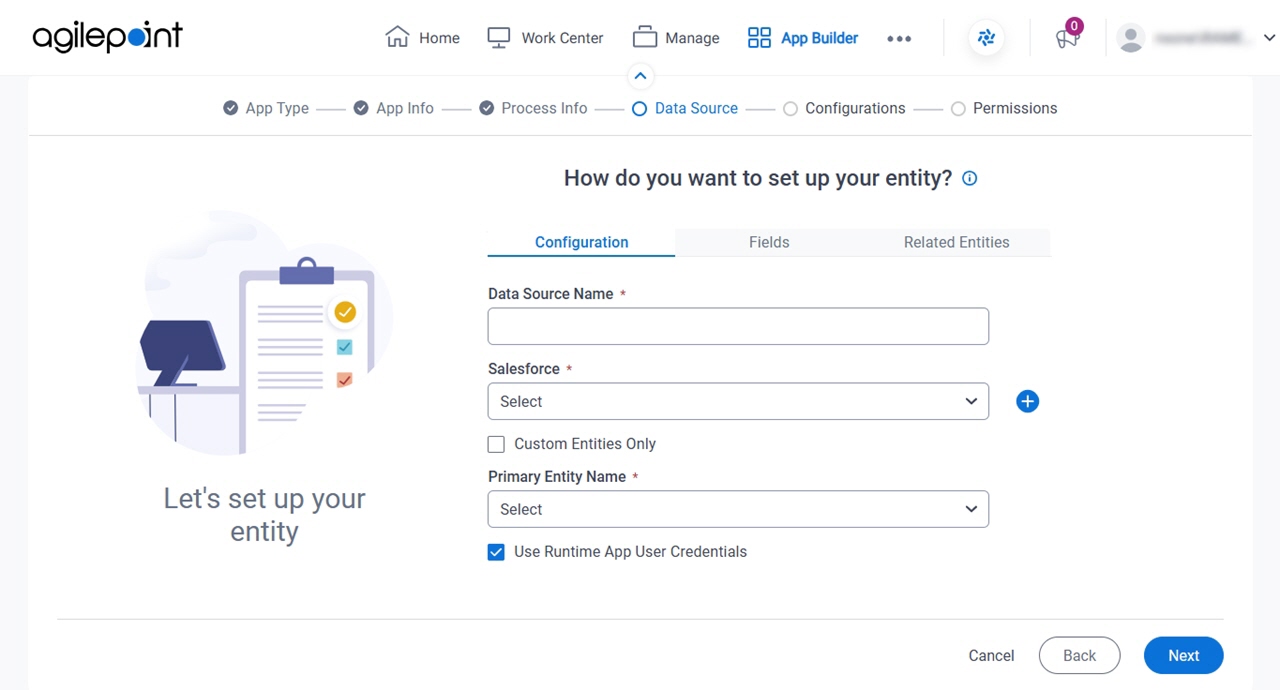
Figure 1. How do you want to set up your entity? > Configuration tab

Configuration tab

Fields

Field NameDefinition

Data Source Name

Description:
Specifies a name for the data source.
Allowed Values:
One line of text (a string).

Not Accepted:

  • Spaces
Default Value:
None
Accepts Variables:
No

Salesforce

Description:
Specifies the access token that connects to your Salesforce application.
Allowed Values:
A list of access tokens configured for your environment.
Default Value:
None
Accepts Variables:
No
Example:
Refer to:

Custom Entities Only

Description:
Specifies whether to show only Salesforce custom entities in the Primary Entity Name list.
Note:
The word entity on this screen refers to a container within your data model. For Data Entities or Salesforce, this container is called an entity. For a database, entity refers to a database table. For SharePoint Integration, entity refers to a SharePoint list. For Microsoft Excel, entity refers to an Excel table.
Allowed Values:
  • Selected - Shows Salesforce custom entities in the Primary Entity Name list.
  • Deselected - Shows all Salesforce entities in the Primary Entity Name list.
Default Value:
Deselected
Accepts Variables:
No

Primary Entity Name

Description:
Specifies the Salesforce entity from which you want your form to retrieve data.
Note:
The word entity on this screen refers to a container within your data model. For Data Entities or Salesforce, this container is called an entity. For a database, entity refers to a database table. For SharePoint Integration, entity refers to a SharePoint list. For Microsoft Excel, entity refers to an Excel table.
Allowed Values:
A Salesforce entity from the list.
Default Value:
None.

When you select the Salesforce access token, the name of the entities show in the Primary Entity Name list.

Accepts Variables:
No

Use Runtime App User Credentials

Description:
Specifies whether to use the credentials for the authenticated runtime app user to submit the form data to Salesforce.
Allowed Values:
  • Selected - Uses the credentials of the authenticated runtime app user to submit the form data to Salesforce.

    Only use this option in these conditions:

    • Your organization uses Salesforce authentication for AgilePoint NX.
    • Your runtime app users have permissions to submit data to your Salesforce entity that is associated with the form-based app.
  • Deselected - Uses the access token credentials you select in the Salesforce field on the How do you want to set up your entity? > Configuration tab to send data to and from Salesforce.
Default Value:
Deselected
Accepts Variables:
No

How do you want to set up your entity? > Fields tab

Specifies the fields from your Salesforce entity to use in your form-based app.
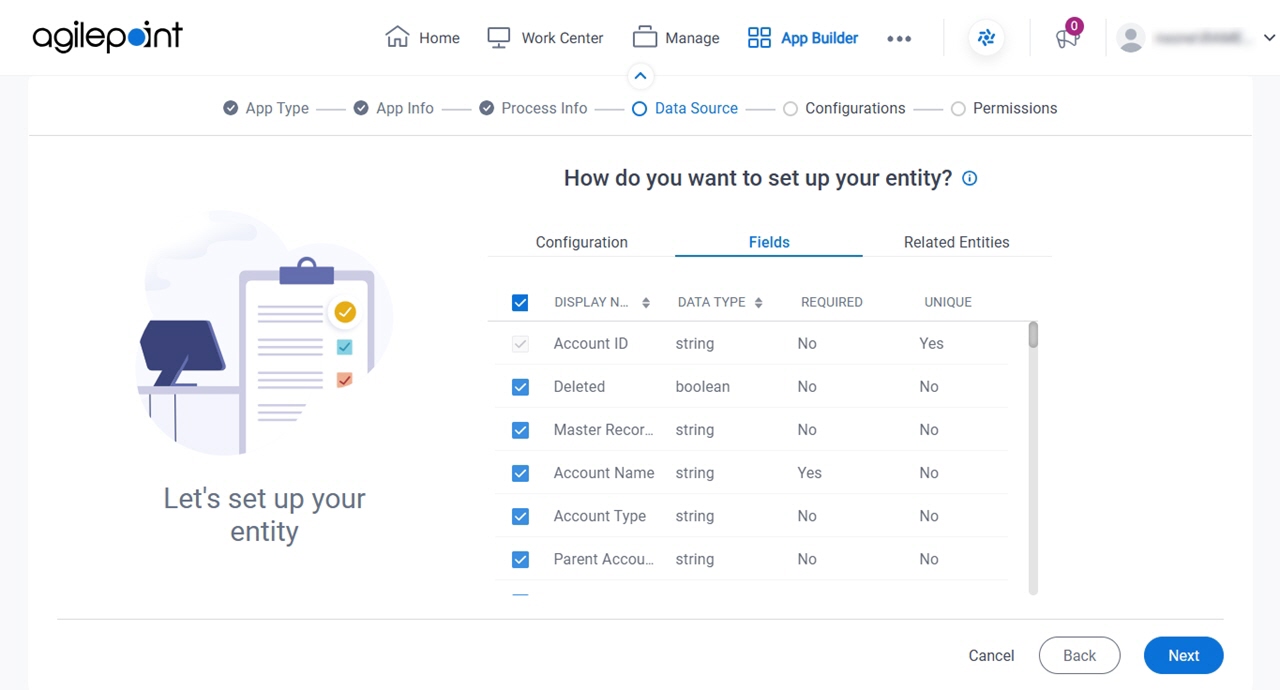
Figure 2. How do you want to set up your entity? > Fields tab

Fields tab

Fields

Field NameDefinition

Check box

Description:
Specifies the fields to use on your form.
Allowed Values:
  • Selected - Your form contains the field.
  • Deselected - The field does not show on your form.
Default Value:
Selected

Display Name

Description:
Shows the fields associated with an entity.
Allowed Values:
Read only.

Data Type

Description:
Shows the data type of a field.
Allowed Values:
Read only.

Required

Description:
Specifies whether the field is required.
Allowed Values:
Read only.

Unique

Description:
Shows whether a duplicate value is permitted in the field.
Allowed Values:
Read only.

How do you want to set up your entity? > Related Entities tab

Specifies related entity to use on your form for Salesforce.
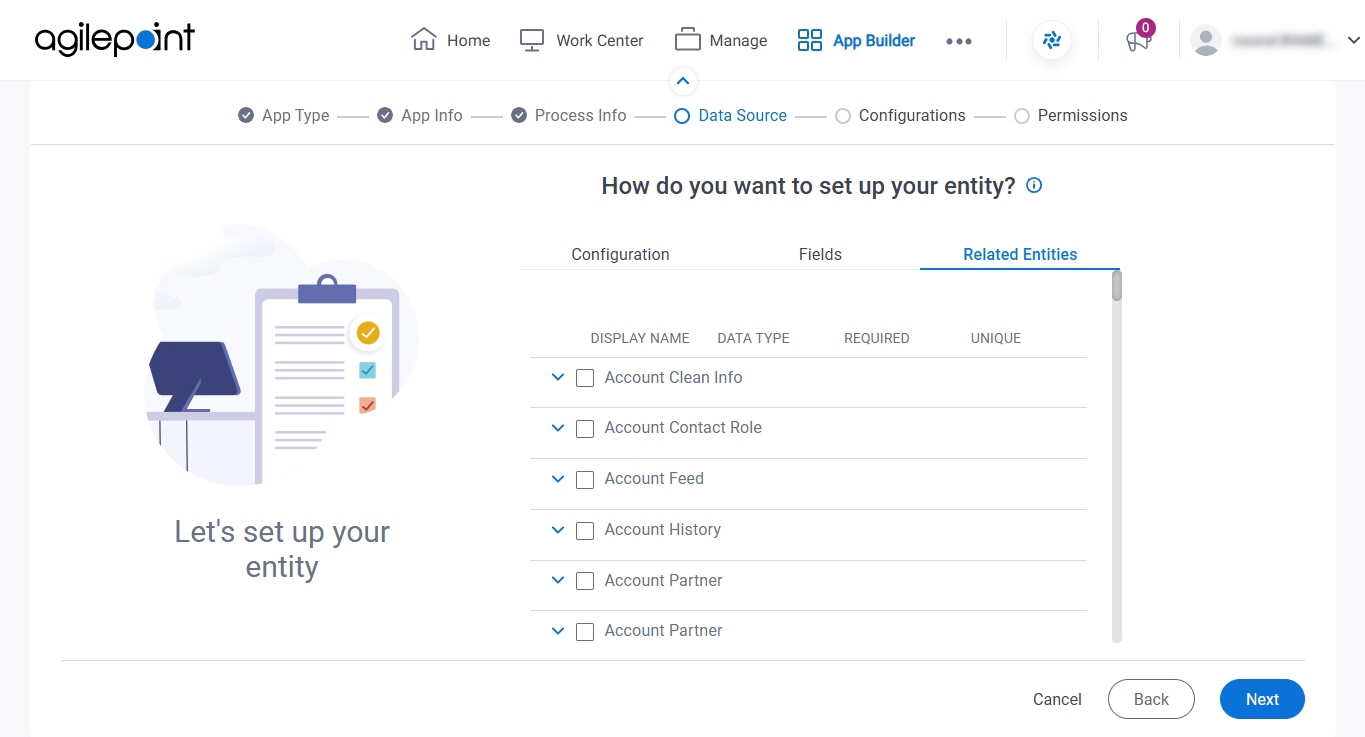
Figure 3. How do you want to set up your entity? > Related Entities tab

Related Entities tab

Prerequisites

Good to Know

Fields

Field NameDefinition

Checkbox

Description:
Specifies the related entities to use on your form.
Allowed Values:
  • Selected - Your form contains related entity.
  • Deselected - Your form does not use the related entity.
Default Value:
Deselected

Display Name

Description:
Shows the entities that have relationships with the primary entity.
Note:
The word entity on this screen refers to a container within your data model. For Data Entities or Salesforce, this container is called an entity. For a database, entity refers to a database table. For SharePoint Integration, entity refers to a SharePoint list. For Microsoft Excel, entity refers to an Excel table.
Allowed Values:
Read only.

Data Type

Description:
Shows the data type of an entity.
Allowed Values:
Read only.

Required

Description:
Specifies whether the related entity is required.
Allowed Values:
Read only.

Unique

Description:
Shows whether a duplicate value is permitted in the related entity.
Allowed Values:
Read only.